Power Purchase Agreements (PPAs) and Energy Purchase Agreements (EPAs)
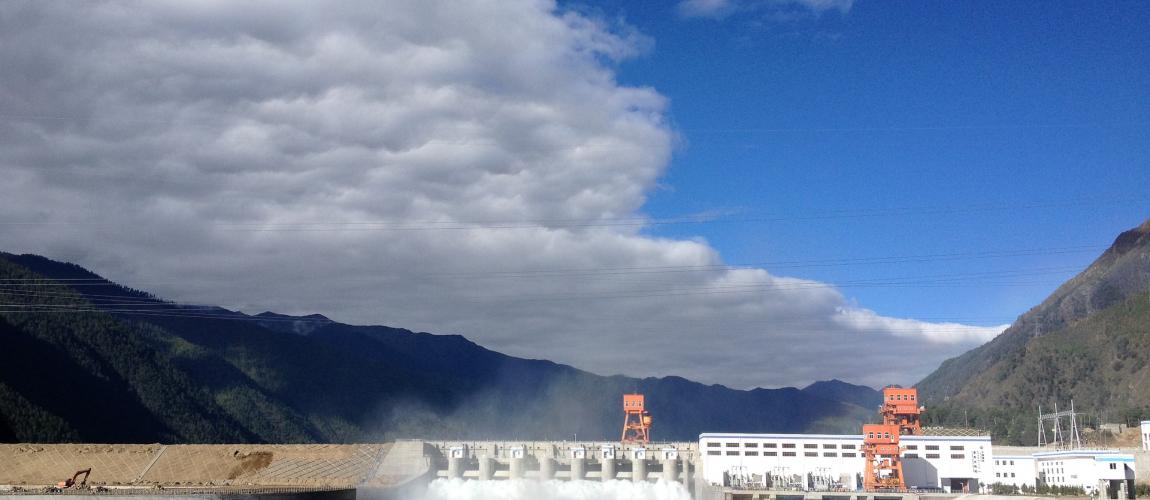
Photo Credit: Image by 子墨 黄 from Pixabay
A Power Purchase Agreement (“PPA”) is generally the primary contract between the public and private sector parties which underpin a power sector PPP. It is typically between a public sector purchaser "offtaker" (often a state-owned electricity utility, in jurisdictions where the power sector is largely state operated) and a privately-owned power producer. It usually provides the primary revenue stream which underwrites the PPP project. Therefore, the structure and risk allocation regime under the PPA is central to the private sector participant’s ability to raise finance for the project, recover its capital costs and earn a return on equity. This summary is focused on a base load thermal plant developed pursuant to a PPP. While certain elements may be common across all PPAs, different considerations would apply for mid-range or peaking thermal plants or plants using different generation technology (e.g. wind or solar). A number of the considerations outlined below would also need to be adapted for PPAs between private parties: for example, for sale on an electricity spot market (which are more commonly seen in jurisdictions with a more de-regulated power sector). (see Deregulated Electricity Markets and Synthetic PPAs below). The PPA often sits alongside or is combined with a BOT or concession agreement: in addition to obligations relating to the sale and purchase of the power generated, the project company is also required to design, construct, operate and maintain the power plant in accordance with agreed specifications. Sale of capacity and energy - the PPA may require the project company both to make available to the purchaser an agreed level of capacity at the power plant and deliver the energy generated in accordance with its provisions. Pricing – the pricing regime in the PPA typically has two components: an availability or capacity charge, which is payable by the offtaker in consideration of the power plant operator making generation capacity available to the offtaker, whether or not it actually offtakes electricity from the power plant. This component is typically designed to provide a revenue floor for the project and is the primary channel through which each project proponent would recover its fixed costs (including its capital investments, financing costs and a return on equity); and an output charge – this is usually referenced to the volume of electricity actually delivered and is intended to cover the project company's variable costs. The pricing mechanism is the primary mechanism for allocating revenue and market risk in respect of the project between the public and private sectors and is central to the private project proponent’s and its lenders’ assessment of the commercial viability and bankability of the project. Typically, private project proponents and lenders will require the PPA to run for a long term to guarantee investment recovery. Third party sales – the ability to make third-party sales can enhance the commercial viability of the project and provide it with a degree of cushioning against demand side risks under the primary long term PPA. This flexibility also has the advantage that, given the long-term nature of the primary PPA, if the market is deregulated at a later date, then the power plant can participate in that market without completely unwinding the primary PPA. However, purchasers are often nervous about allowing third-party sales as they want to be sure that all capacity is available to them at all times and so the PPA may include an exclusivity period during which all power produced is to be supplied to the purchaser. Flexibility may need to be incorporated into the PPA to ensure that this exclusive period is not an impediment to future development/ deregulation of the electricity market. The practical feasibility of third party sales (both in terms of demand and access to physical infrastructure to deliver electricity to third parties) will also need to be considered carefully. Underperformance and delays by power producer – the PPA may provide sanctions or require the project company to pay liquidated damages if it fails to deliver power as promised. Common examples include liquidated delay damages, if the construction of the project is not completed on schedule or tariff abatements where the power plant does not meet agreed performance standards during the operational phase. Private project proponents and their lenders will be concerned to ensure to limit the impact of liquidated damages on their ability to recover their capital investments and earn a return. A common sticking point is whether the project company may be required to pay liquidated damages as a result of disruptions which are not within its control. Force majeure or purchaser breach of contract – the project company is typically relieved from complying with its contractual obligations (and liability to damages) for disruptions arising from force majeure events. However, the scope of force majeure relief available can often be a key negotiation point as it is a key contractual mechanism for allocating risk between the public and private sector. One common issue is to what extent a project company can obtain force majeure relief due to inability to obtain relevant government approvals. The force majeure regime is often closely linked to the change in law regime. The scope of force majeure relief may also need to be adapted to different technologies. For example, a gas fired power plant is exposed to different disruption risks as a wind farm. Testing regime – this should be objective and designed to confirm levels of contracted capacity, reliability and fuel efficiency or heat rate. Test results should ideally be certified by an independent engineer. Termination – the PPA will need to provide for what happens on termination (whether at the end of the term of the agreement or early termination for default etc), including obligations of the power producer to hand-over assets to the government offtaker, what happens to employees of the power plant if the power plant is transferred to the offtaker on termination. The availability and calculation of an early termination payment (typically for the purchaser to buyout the power plant) will be central to the commercial viability and bankability of the project. Project operation – issues typically include scheduled outages and maintenance outages, operation and maintenance, emergencies and keeping of accounts and records. Change of law – PPA should address impact on tariff in the event of a change in applicable law and the mechanism for tariff adjustment. Private project proponents and their lenders will be anxious to ensure that the cash flows of the project are appropriately protected against changes in law (at least in the country where the project is situated). Note that the allocation of change of law and other regulatory risks would be quite different if the offtaker were a private entity. In the latter case, the private offtaker has significant less ability and appetite to absorb change in law risks (compare to a government entity). For more detailed analysis of the issues involved in PPAs of this type, see the IFC guide to power purchase agreements (1996) – found at Annex 2 (page 160) of the World Bank Concessions Toolkit (pdf) and also a more recent guide titled Understanding Power Purchase Agreements published the African Legal Support Facility. It is examples of this type of PPA which are provided below. The sample PPAs have been divided up into those more relevant to smaller and rural power projects, and more complicated PPAs relevant to larger projects in developing countries. Power purchase agreements (PPAs) are used for power projects where: the projected revenues of the project would otherwise be uncertain and so some guarantee as to quantities purchased and price paid are required to make the project viable; there is a possibility of competition from cheaper or subsidized domestic or international competition (e.g., where a neighboring power plant is producing cheaper power) - the PPA provides some certainty of being protected from such competition; there is one or a few major customers that will be taking the bulk of the product. For example, a government utility may be purchasing the power generated by a power plant. The government will want to understand how much it will be paying for its power and that it has the first call on that power. The project company will want certainty of revenue; and, the purchaser wishes to secure security of supply. Power Purchase Agreement (PPA) for short term temporary, mobile, or emergency power Short term, temporary or emergency power purchase agreement for purchase of power from a mobile plant (on skids). Prepared by international law firm for a small-scale rural power project in Africa, together with an Implementation Agreement. Power Purchase Agreement (PPA) for Small Scale Rural Power Projects Part of suite of documents prepared by international law firm for use in small scale rural power projects. Documents prepared for country in South East Asia. Power Purchase Agreement (PPA) - short-form agreement developed for small scale power projects in Namibia Standard short-form power purchase agreement developed for small scale power projects in Namibia. This is part of a suite of documents including a fuel supply agreement that can be found on the Namibian Electricity Control Board. Power Purchase Agreement (PPA) - simplified agreement developed for Kenya Short-form relatively simplified power purchase agreement developed for the Kenyan Electricity Regulatory Board for use in "hydro, geothermal or gas fired" power generation facilities. It anticipates both a capacity charge and an energy charge. Seller is to sell all the net electrical output of the plant to purchaser. The Energy Regulatory Commission provides also a link to a Model PPA for larger renewable generators more than 10MW and a PPA for smaller renewables projects less than 10MW on its Renewable Energy Portal. Short-form relatively simplified power purchase agreements developed for Small Power Producers in Tanzania - Standardized PPA for Main Grid Connection and Standardized PPA for Isolated Mini Grid Connection together with Standardized Tariff Methodologies for each case and Detailed Tariff Calculations, which can all be found on the EWURA web site. Also see Guidelines for development of small power projects. Power Purchase Agreement (PPA) for medium to large scale oil fired plants (Example 5) - Longer-form sample power purchase agreement for use in developing countries for oil fired plants. Prepared by international law firm for the World Bank as an outline of provisions commonly found in power purchase agreements in international private power plants. Long Term Draft Power Purchase Agreement (PPA) produced by Indian Central Electrical Regulatory Commission (CERC) (for projects where location and fuel is specified) (pdf) - Draft power purchase agreement developed by CERC for Indian IPP market - intended for long-term agreements (more than 7 years) for use for setting up power stations where location or fuel is not specified. Attached link is draft request for proposals - for draft PPA go to page 70. Power Purchase Agreement (PPA) and Implementation Agreement produced for Pakistan's Private Power and Infrastructure Board by international law firm (issued 2006) - standard form power purchase agreement and implementation agreement for fossil fuel fired electric power generation facility developed by international law firm for Pakistan's Private Power and Infrastructure Board, together with a Model Pricing Schedule for PPA, and the Policy that set the general framework that led to the production of the three standard form documents Policy 2002 (PDF). Power Purchase Agreement (PPA) produced by Pacificorp for large scale power plants (pdf) - Draft power purchase agreement developed by Pacificorp for power plants in excess of 1000 kilowatt net output - relatively short-form agreement. Drafted in the context of U.S. regulatory structure. Sample Power Purchase Agreement used in a public tender process by the Vietnamese government for the design, construction and operation of a large scale coal-fired power plant. The agreement is to be entered into between Vietnam Electricity or EVN (a utility company owned by the Vietnamese government and the operator of the Vietnamese national power system) and a project company incorporated in Vietnam. The agreement forms part of a suite of project documents which also includes a separate BOT Contract between the project sponsors and the Ministry of Industry and Trade of Vietnam. The structure of the project agreements reflects both the fact that Vietnam’s power sector continues to be dominated by state entities (the offtaker is effectively a vertically integrated state monopoly) and the fact that it is moving towards a more competitive market (the BOT Contract expressly contemplates renegotiation of the contract when a competitive electricity market is established). The agreement is for a term of 25 years from when the plant commences commercial operations. For the key features of the agreement, read more... The above PPAs should be distinguished from power purchase agreements in a deregulated electricity market where the agreements are typically contracts for purchase of power from a private producer where the power plant is already in existence or where the power plant is being constructed at the initiative of the private producer. For examples of this type of PPA click on the following sample link: Tri-State PPA. Synthetic PPAs may become more relevant for the financing of generation projects as a country’s power sector moves from a centralized model to a de-regulated market-oriented model (such as the one in Australia). Under a synthetic PPA, the project company would physically sell the electricity it produces into the spot market at a floating price, while it enters into a derivative contract at the same time (usually structured as a swap) with an “offtaker” who agrees to “purchase” from the power plant, a notional quantity of electricity at a fixed price over the term of the PPA. In exchange, the “offtaker” is paid the floating price at which such electricity would be sold on the spot market. The synthetic PPA serves an economic function that is broadly similar to conventional long term PPAs, in that it provides the project with a level of guaranteed revenue by hedging the project against fluctuations in the electricity spot price. Physical offtake is often less problematic in liquid electricity markets and can be managed separately by bidding into the spot market. Synthetic PPAs are highly versatile instruments which can be adapted for a wide range of purposes. In the Australian market, they are often structured as the primary long term offtake arrangement which underwrites the financing of large scale wind farm projects. They are typically documented in the form of a confirmation under a master agreement used for OTC derivative transactions (e.g., the ISDA Master Agreement). The Australian Financial Market Association publishes guidelines and template documents for the documentation of synthetic PPAs in the Australian market. Use of synthetic PPAs also gives rise to additional compliance and licensing considerations under applicable financial regulations, as the PPA may be considered a financial product. Standardized Synthetic PPA – This document is developed as a sample agreement for a PPA in Spain for large scale renewable projects. It provides a further example of how offtake arrangements for generation projects in more developed jurisdictions with market-oriented power sectors can be structured. It sets out the draft terms of a synthetic (financial) PPA structured as a contract for differences with no physical delivery of electricity, consisting of the financial coverage of the price of energy, adjusting the differences between the Spanish wholesale market price and the agreed price. Seller undertakes to develop renewable projects and Seller and Buyer agree to pay the corresponding monthly payments to the other party, as applicable arising from the differences between the agreed price and the Spanish wholesale market price. For the key features of the Standardized Synthetic PPA, read more... The European Federation of Energy Traders ("EFET") has published and standardized individual PPA for utilities and corporates. This EFET model may be adapted to specific features of the Spanish jurisdiction and foresees the possibility to adapt it to both physical and financial PPAs. French standard power purchase agreements (Les modèles indicatifs de contrats d'obligation d'achat d'électricité) for small installations / renewable energy sources, within the framework of the law of 2000 (loi no.2000-108 du 10 fevrier 2000) and decree relating thereto (decret no.2000-877 du 7 septembre 2000) and decree of 2001 (decret no.2001-410 du 10 mai 2001) setting out the terms on which the grid and power distributors are to purchase electricity from the small power producers and wind power - Arrêté du 8 juin 2001 fixant les conditions d'achat de l'électricité produite par les installations utilisant l'énergie mécanique du vent telles que visées à l'article 2 (2o) du décret no 2000-1196 du 6 décembre 2000.Key features of a Power Purchase Agreement
When to use a Power Purchase Agreement
Sample Power Purchase Agreements
Emergency Power and Mobile Plants
Sample PPAs: Small and Rural Projects
South East Asia
Namibia
Kenya
Tanzania
Sample PPAs: Mid-sized and Large Projects
Global
India
Pakistan
United States
Vietnam
Deregulated Electricity Markets
Synthetic Power Purchase Agreements
Australia
Spain
Sample Power Purchase Agreements: Renewable Energy
French Standard Power Purchase Agreements
Updated: October 10, 2021
Related Content
Additional Resources
An Analysis of Independent Power Projects in Africa: Understanding Development and Investment Outcomes
SARI: Final Report on Wholesale Electricity Prices in South Asia 2003
NERC: Notice of Proposed Rulemaking PPA for Captive Customers
Private Participation in Renewable Energy Database