Force Majeure Clauses - Checklist and Sample Wording
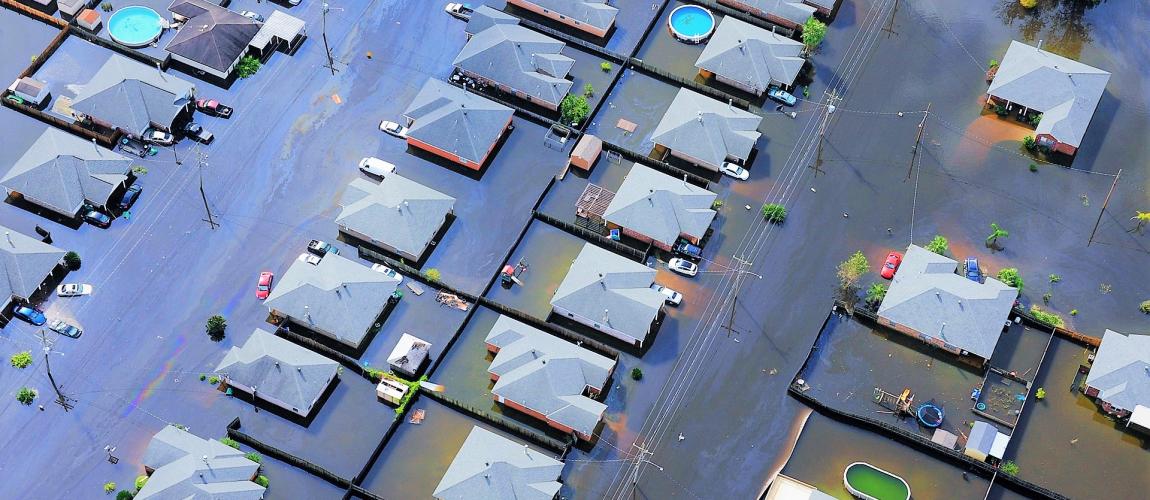
Photo Credit: Image by 272447 from Pixabay
Click to download word and pdf versions of the Force Majeure Checklist
See also, Sample force majeure Clauses Certain events, beyond the control of the parties, may inhibit the parties from fulfilling their duties and obligations under the project agreements. To avoid the resultant breach of contract, parties may prefer to excuse contractual obligations to the extent that they have been so inhibited. Different legal systems have developed different theories in response to this need, including the doctrines of impossibility and frustration in England and the United States and force majeure in France. Under French law force majeure is an event that is unforeseeable, unavoidable and external that makes execution impossible.[1] In order to avoid the uncertainties and delays involved in relying on the applicable law, parties to contracts often prefer to provide for a specific regime for force majeure, along with a definition of which events shall qualify for special treatment. The term force majeure used in drafting project documents comes originally from the Code Napoléon of France, but should not be confused with the French doctrine. Generally, force majeure means what the contract says it means. No. Force majeure is often treated as a standard clause that cannot be changed. However, as the clause excuses a party from carrying out its obligations, it needs to be carefully thought through and tailored for the project in question. It may be appropriate for there to be different events that give rise to different contractual consequences. For example, see the 2013 EPEC publication by Allen & Overy comparing termination clauses and force majeure clauses in PPP projects in a number of European countries. It is important to note that Lenders do not like force majeure as it creates a level of uncertainty for them. Therefore, where external funding is to be called upon, thought should be given when drafting the underlying project agreements as to what Lenders are likely to accept. The risk of force majeure is generally allocated to the grantor. The theory goes that the grantor is best able to manage force majeure risk, as such risk relates partially to the activities of the host country government and its relations with other countries and/or its populace, and that the grantor is the only party able to bear such risk, given its size and the difficulty of obtaining adequate insurance. However, in certain markets, such as the UK, the grantor may require the project company to bear a portion, or all, of the force majeure risk or may separate the risks between natural and political force majeure events, with different consequences (see below). Should the affected party be relieved of its obligations to perform under the contract? In some projects a force majeure event is likely to have an impact on the whole project – such as lightning striking a power plant transmission substation and making it temporarily unusable. However, in other projects, such as a water concession over a whole network, even if force majeure has an impact on a specific treatment plant or pumping station, it may not affect the whole network. The affected party should be under an express duty to minimize the disruption caused by force majeure. Should some events constitute force majeurefor one party but not the other? Care should be taken to ensure that force majeure events only relieve obligations to the extent that they prevent the party from performing them. Is the contractor to pay liquidated damages if completion or some other event does not occur by a specified date? If so, the contract should stipulate that the date in question is extended by any period during which the contractor is prevented from carrying out the activity in question. To what extent (if any) should the contractor continue to be paid even where it is unable to perform its obligations. This should be expressly stated. Is there a linked project agreement that may be affected also? Are the provisions in related project agreements “back-to-back”? For example, if a project company is to receive no revenues during a force majeure event under a power purchase agreement, will it still be liable under the take or pay provisions in the fuel supply contract? Lenders will want to ensure that the definition and treatment of force majeure is identical in each of the project contracts. However, it should be remembered that force majeure only excuses a party from performing under a contract to the extent that performance under that contract is hindered or prevented. Therefore, it may be necessary to include a provision specifically referring to circumstances where a party is prevented from performing its obligations under another agreement due to force majeure.[2] Should there be termination in case of extended force majeure events? Should a maximum period be identified during which the effects of one single event or an aggregate duration of force majeure events over the period of the concession may last before one or both of the parties can act to either remove itself from the project or obtain compensation for damages incurred. NB – watch out for wording which talks about continuation of the force majeure event for a period – what is important is the duration of the inhibiting effects of force majeure. The theory is that parties will have insurance and other resources to tide them over for some period of force majeure, but eventually they should be entitled to terminate. Often if it agrees to continue with the project despite continuing force majeure, the project company’s compensation during force majeure will increase accordingly to create an incentive to remain. The definition of "force majeure" will vary from project to project and in relation to the country in which the project is to be located. The definition of "force majeure" generally includes "risks beyond the reasonable control of a party, incurred not as a product or result of the negligence of the afflicted party, which have a materially adverse effect on the ability of such party to perform its obligations". Sometimes an even stricter requirement, requiring impossibility of fulfilment, is imposed. This is a very difficult fact to prove and could result in the operator bearing an unacceptable level of risk. Parties should also consider whether it is appropriate to exclude consequences which could reasonably be avoidable by either party It is important to ensure that force majeure events are events which are not reasonably foreseeable/ are unlikely to occur. Therefore, where supply of electricity is necessary for the operation of the facilities but is generally intermittent, then the parties should ensure that there is standby generation or some other solution. In other circumstances, however, intermittent supply will be unusual/ not reasonably foreseeable and it will be appropriate to include it as an event of force majeure. The parties will usually agree on a list, which may or may not be exhaustive, of examples of force majeure events. Force majeure events generally can be divided into two basic groups: natural events and political events. (a) natural events These may include earthquakes, floods, fire, plague, Acts of God (as defined in the contract or in applicable law) and other natural disasters. These are events which are not within the control of the Host Government. The parties will need to look at the availability and cost of insurance, the likelihood of the occurrence of such events and any mitigation measures which can be undertaken. For example, although the grantor will be best placed to appreciate the ramifications of common natural disasters, the contractor should be able to obtain insurance for the majority of this risk or otherwise mitigate the occurrence of the risk. (b) political and special events These may include terrorism, riots or civil disturbances; war, whether declared or not; strikes (usually excluding strikes which are specific to the site or the project company or any of its subcontractors), change of law or regulation [this is often dealt with separately from force majeure], nuclear or chemical contamination, pressure waves from devices travelling at supersonic speeds, failure of public infrastructure. The grantor's willingness to protect the contractor from political risk will go a long way to reassure the contractor and the lenders that the project has host government support. In many developing countries, the risk of political upheaval or interference is of great concern. As a general proposition the grantor in a developing country should be willing to bear a certain amount of political force majeure risk. Special risks included in this list generally represent those risks which are uninsurable under normal commercial conditions, such as nuclear contamination. These risks are generally considered to be beyond the control of the contractor. Political risk insurances may be available, either through private insurances, multilateral organisations such as the World Bank, MIGA or export credit agencies. See Financing for more on this. [1] "Impossibilité absolute de remplir ses obligations due à un événement imprévisible, irrésistible et extérieur" French Civil Code, arts 1147 and 11248 (30 August 1816, reprinted 1991). [2]Vinter – Project Finance (3rd Ed) para 6-004.What is force majeure?
Are force majeure clauses standardized?
Checklist of issues to consider re. Force Majeure
Who should bear risk?
What are the consequences of force majeure event?
Liquidated damages
Continued payment?
Other project documents
Termination for extended force majeure
Definition of force majeure
Force majeure events
Updated: March 8, 2022